
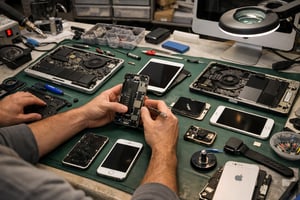
Apple’s latest Environmental Progress Report outlines how the company is expanding device collection, recycling, and material recovery across its global product ecosystem. The report highlights expanded take-back programs, advanced disassembly technologies, and a growing use of recycled materials in new devices.
For the refurbishment industry, the implications go far beyond sustainability messaging.
Apple’s strategy reinforces a reality the secondary device market has understood for years: the future of consumer electronics depends on structured lifecycle management.
Recovering value from devices after first use is no longer optional. It is becoming a core part of the global technology supply chain.
The Circular Device Economy Is Scaling
Apple’s approach focuses on several key areas.
First, the company continues to expand its trade-in and take-back programs, making it easier for customers to return devices when they upgrade. These programs now operate across the vast majority of markets where Apple products are sold, using both in-store and mail-in channels.
Second, Apple is investing heavily in advanced recycling technologies designed to recover valuable materials from returned devices. Systems such as the Daisy disassembly robot can separate components and extract materials including rare earth elements, cobalt, gold, and aluminium.
Third, the company is increasing the proportion of recycled and low-carbon materials used in new products. Recovered materials from returned devices are increasingly being reintroduced into Apple’s manufacturing supply chain.
Finally, Apple works with certified recyclers and specialist partners around the world to ensure devices are processed responsibly and valuable materials are recovered efficiently.
Together, these initiatives demonstrate the scale of Apple’s commitment to building a more circular product ecosystem.
But collecting devices is only the beginning.
What Happens Before Recycling
Most devices returned through take-back programs are not immediately recycled.
Instead, they typically pass through a sequence of lifecycle stages that determine whether the device can be reused, refurbished, resold, or ultimately recycled.
This process requires operational infrastructure that many outside the refurbishment industry rarely see.
Returned devices must be:
• securely wiped of all user data
• fully tested and diagnosed
• graded and assessed for resale potential
• refurbished where necessary
• redeployed through secondary markets
Only when devices are beyond economic repair do they move into recycling streams.
In other words, the circular economy for electronics depends not only on recycling technology, but also on the operational systems that manage devices between first use and final recovery.
Are your refurbishment workflows ready for large-scale device recovery?
Trade-in programmes and enterprise refresh cycles are dramatically increasing device intake volumes.
👉 See how Blackbelt360 helps refurbishers manage diagnostics, erasure, and lifecycle reporting at scale:
https://www.blackbelt360.com/request-a-demo
Why Lifecycle Infrastructure Matters
As manufacturers, retailers, and enterprises expand their device recovery programs, the complexity of processing returned devices increases dramatically.
Modern smartphones and connected devices contain:
• advanced encryption and security frameworks
• complex firmware and operating system layers
• increasingly sophisticated hardware components
• regional software configurations
Processing these devices safely and efficiently requires structured workflows and specialised software platforms.
Diagnostics systems ensure devices are tested consistently and accurately. Certified data erasure tools protect user privacy and ensure compliance with global regulations. Automated reporting systems provide the audit trails required by enterprises, marketplaces, and regulatory frameworks.
Without this operational layer, the circular device economy simply cannot scale.
Refurbishment Sits At The Centre Of The Circular Economy
The secondary device market has grown rapidly over the past decade and is now valued at tens of billions of dollars globally. Demand for high-quality refurbished devices continues to increase as businesses and consumers seek more affordable and sustainable technology options.
Refurbishers therefore play a critical role in extending device lifecycles and reducing electronic waste.
By recovering devices, restoring functionality, and returning them to market, refurbishment operations unlock significant economic value while reducing the environmental footprint of electronics production.
At the same time, manufacturers benefit from stronger material recovery pipelines, retailers gain access to structured trade-in programs, and enterprises can manage device decommissioning securely.
It is a system that only works when each stage of the lifecycle is managed effectively.
Frequently Asked Questions
Why are manufacturers focusing more on circular device ecosystems?
Circular strategies allow manufacturers to recover valuable materials, reduce environmental impact, and maintain stronger control over device supply chains. As electronics production grows, material recovery and reuse are becoming increasingly important.
Where does refurbishment fit into the circular device economy?
Refurbishment extends the useful life of devices before recycling becomes necessary. By securely processing, testing, and redeploying devices into secondary markets, refurbishers capture economic value while reducing electronic waste.
Why is secure data erasure critical in device recovery?
Before any device can be resold or redeployed, all user data must be permanently removed. Certified erasure processes ensure privacy protection, regulatory compliance, and enterprise confidence in refurbishment workflows.
What infrastructure supports large-scale device recovery programmes?
Structured lifecycle platforms that integrate diagnostics, secure data erasure, grading, and reporting enable refurbishers and ITAD providers to process large volumes of returned devices consistently and securely.
The Takeaway
Apple’s environmental strategy highlights the growing importance of device recovery, material reuse, and circular manufacturing.
But behind every successful circular program lies a complex operational reality.
Devices must be securely processed, accurately tested, and responsibly redeployed before recycling even begins.
Blackbelt360 helps refurbishment businesses manage this lifecycle with structured diagnostics, certified data erasure, and scalable workflow management designed for high-volume device recovery.
👉 Request a demo to see Blackbelt360 in action:
https://www.blackbelt360.com/request-a-demo