
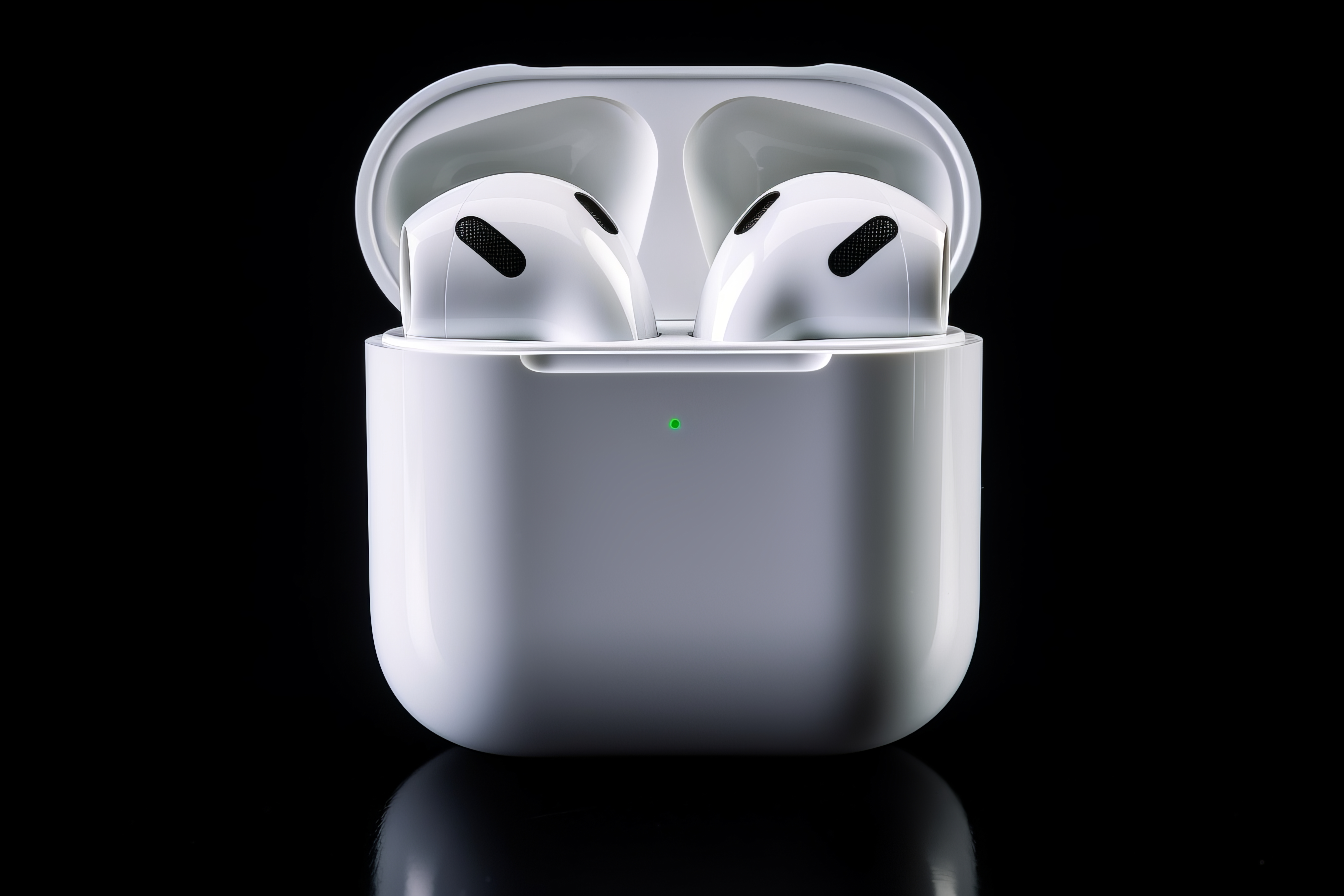
Most refurbishers underprice AirPods because they cannot grade them with confidence. Five shifts to turn the pile into a reliable profit line, built on a guided test, a per-unit record and a grade the buyer can defend.
Any refurbisher processing mobile returns at volume has an AirPods pile. It arrived with the mobile trade-in wave, grew through the carrier returns programs, and is now the fastest-growing accessory stream in the operation.
The problem is not what the pile contains. It is what the operation can prove about it. A pair of AirPods on that pile might be in top-of-market condition, or might be hiding a failing microphone that will trigger a return in week two. Without a reliable test, the operation cannot tell the difference, so it prices every unit cautiously to protect against the few bad ones in the batch. The good units carry the discount, and the margin that should be there is left on the floor.
Reliable profit on AirPods comes from the opposite approach: grade every unit against a defined test, keep the record linked to the unit, and let the buyer see what was done. The margin was always there. The proof was what was missing.
Below are five shifts refurbishers, accessory resellers and marketplace sellers make to scale AirPods refurbishment with reliable profit.
4 stepsscan and pair, data capture, audio and mic, result linked |
8.7M+mobile devices erased on the platform in 2025 |
Every unitone record, one printable certificate, retrievable in minutes |
Five shifts to scale AirPods refurbishment with reliable profit
AirPods refurbishment is the volume category most refurbishers underprice. The device sells on evidence, not on inspection, and the operation that cannot produce the evidence prices the discount in. The five shifts below describe how operations are closing that gap.
1. Stop pricing AirPods on hope
An AirPods unit without a test record gets priced to protect the operation against the worst case. The grade is cautious because the technician cannot be sure. The sell price is cautious because the grade is cautious. The margin that should be there gets absorbed into a discount that protects against the few bad units in the batch. The operation ships at the price the batch forces, not the price the individual unit would earn.
The fix: shift the question. The AirPods unit on the pile is not low value, it is unproven. A guided test takes it from unproven to graded with evidence. The sell price can match the actual condition of the unit, not the hedged assumption. The margin was always there; the proof was what was missing.
2. Run a guided test, not a visual check
Visual grading on AirPods is close to useless. Earbuds can look pristine and have a failing microphone. A battery can hold the shell shape and not hold a charge. A charging case can read as working through its indicator light and fail under load. Technician judgment on earbuds is a coin flip at best, which is why visual-only workflows carry high RMA rates and why buyers price the risk in.
The fix: run every AirPods unit through a guided test, not a visual check. Diagnostics for AirPods takes the technician through a four-step session on every unit: scan and pair, device data capture, audio and mic testing, and a result linked to the device and printable. The grade is the test output, not the technician's eye. The process is the same on every unit, every technician, every shift.
3. Link the result to the device, not the batch
Batch-level records mean no individual AirPods unit has an evidence trail. When a return comes back six weeks later, the operation has no way to look up what was tested on that specific unit. The dispute is settled on assumption. The grade decision gets written off because no one can defend what was done. Volume operations lose a predictable share of revenue to this gap every month.
The fix: every test result lives with the device, keyed to the serial number of the unit. When the buyer questions a specific unit six weeks after delivery, the record is a lookup, not a reconstruction. When the compliance officer asks for the test data on a shipment, the record is already there. When the marketplace reviewer requires per-unit evidence to list the item, it is available at the click.
4. Make the printable record the evidence trail
Internal test records that the buyer never sees do not shift buyer behavior. The buyer still discounts on the assumption that the workflow was thin, because the only evidence they have is the device itself and their own inspection. The operation that holds the evidence internally is still priced as if it does not.
The fix: the printable record travels with the unit. The buyer sees what was tested, when, and against what methodology. A defensible grade is worth more than an optimistic one, and the record is what turns the buyer's hedged discount into the price the unit should earn. For enterprise and marketplace buyers in particular, per-unit evidence is now the baseline expectation at RFP and listing stage, not a nice-to-have.
5. Scale the process without scaling the error rate
The grading discipline that works on 50 units a week often breaks on 500. Technician variance creeps in. Rushed sessions skip steps. Different technicians interpret marginal results differently. Volume creates the exact inconsistency that erodes margin, because the batch of 500 ends up carrying the grading distribution of whichever technician happened to run it rather than the actual condition of the units.
The fix: a workflow-enforced test runs the same way on every unit regardless of technician or shift. The platform guides every session through the same four steps. The result is captured against the same methodology. The grade distribution across a batch of 500 units reflects the actual condition of the units, not who was on shift. Mobile diagnostics software built for volume is what makes the discipline hold at scale, and it is also what makes the margin reliable rather than hopeful.
Why reliable margin on AirPods is a workflow outcome, not a device-value question
All five shifts above describe how Diagnostics for AirPods is built. A four-step guided test on every unit. A result linked to the serial number. A printable record that travels with the device. A workflow-enforced process that holds at any volume. Blackbelt360 covers iPhone, Mac and now AirPods, at a price point built for refurbishers, resellers and ITAD operations rather than enterprise IT.
For a refurbisher or accessory reseller processing refurbisher software at any AirPods volume, the operating economics change in three places. The grade on each unit reflects the actual condition rather than the hedged batch assumption. The return rate falls because the test catches the problems the visual check misses. And the AirPods pile that used to loss-lead the operation starts contributing margin because the evidence the buyer needs to pay the right price is finally there.
The margin was always there. The proof was what was missing. A defensible grade is worth more than an optimistic one.
What Diagnostics for AirPods covers
The platform is built to grade every AirPods unit against evidence, through a guided test the technician can run at volume.
The guided test
- Four-step session on every unit: scan and pair, device data capture, audio and mic testing, result linked and printable
- Standardized workflow applied identically on every unit, every technician, every shift
- Generic hardware setup with a jig the operation already has or can source
- One guided session covers the unit, start to finish
Device coverage
- AirPods 1st, 2nd, 3rd and 4th generation
- AirPods Pro 1st, 2nd and 3rd generation
- AirPods Max
Per-unit record and certificate
- Every test result linked to the serial number of the unit
- Printable certificate that travels with the device
- Centralized cloud dashboard, retrievable by serial, customer, batch or date in minutes
- Export in PDF, CSV, XML and JSON for whatever the downstream system expects
Scale and integration
- Multi-site, multi-user and multi-license management as a baseline capability
- Direct integration with RazorERP and Makor
- Industry-standard APIs and Webhooks for any other ERP, WMS or asset management platform
- Pricing built for refurbishers, resellers and ITAD operations rather than enterprise IT
Audit your current AirPods workflow
Before you commit to changing anything, run this short checklist against your current operation. The answers will tell you where the AirPods pile is leaking margin today.
- What percentage of our AirPods volume currently ships without a test record linked to the specific unit?
- When a return comes back six weeks after delivery, can we look up what was tested on that specific unit, or do we settle on assumption?
- What is our RMA rate on AirPods compared to the mobile RMA rate, and what percentage of returns trace back to tests that were not done?
- How consistent is grading across our technicians, and does the shift rota explain more of the grade distribution than the condition of the units?
- When a marketplace buyer or enterprise IT customer asks for per-unit evidence on a shipment, how long does retrieval take?
- Does the printable record travel with the unit to the buyer, or does the evidence stay internal to our operation?
- How much of our AirPods volume gets priced down or set aside because we cannot grade it with confidence?
- If we doubled our AirPods throughput next quarter, would the grading discipline hold at the higher volume or would technician variance creep in?
If any of those answers exposes more hedge than evidence, more assumption than retrieval, or more technician variance than process discipline, the AirPods margin gap is a workflow outcome and the fix is a configuration, not a build project.
Frequently asked questions
Which AirPods models does the platform cover?
AirPods 1st, 2nd, 3rd and 4th generation, AirPods Pro 1st, 2nd and 3rd generation, and AirPods Max. The guided test covers scan and pair, device data capture, audio and mic testing, and a result linked and printable, delivered consistently across every supported model.
How is the guided test different from a visual check?
A visual check depends on the technician's eye. An earbud can look pristine and have a failing microphone. A charging case can read as working through its indicator light and fail under load. The guided test runs the same four-step session on every unit: scan and pair, device data capture, audio and mic testing, and a result linked to the device and printable. The grade is the test output, not the technician's judgment. The process is the same on every unit, every technician, every shift, which is what makes the grade distribution reflect the actual condition of the batch rather than who was on shift.
What hardware is needed to run Diagnostics for AirPods?
The platform is designed to run with a generic hardware setup, including a jig the operation already has or can source. No proprietary rig and no vendor-locked peripherals. The investment is in the workflow and the per-unit evidence trail, not in the hardware.
How does the per-unit record support marketplace listing and enterprise bids?
Every test result is linked to the serial number of the unit, stored in the centralized cloud dashboard, and retrievable by serial, customer, batch or date in minutes. The printable certificate travels with the unit to the buyer. Export is available in PDF, CSV, XML and JSON for whatever downstream system the marketplace, enterprise IT buyer or reseller platform expects. Per-unit evidence is now baseline expectation at listing and RFP stage, and the record is what unlocks the grade the unit should earn rather than the hedged discount the batch currently absorbs.
See Diagnostics for AirPods on your own volume
A 30-minute demo with the Blackbelt360 team will walk you through the four-step guided test, the per-unit record, the printable certificate and the workflow at volume, mapped against your current AirPods pile.
Book a demo → blackbelt360.com